
𝐀𝐠𝐫𝐞𝐞𝐦𝐞𝐧𝐭 𝐟𝐨𝐫 𝐒𝐚𝐥𝐞 (𝐀𝐅𝐒)
In the world of real estate, clarity and protection are paramount. The Agreement for Sale (AFS) under RERA guidelines plays a crucial role in safeguarding both buyers and sellers.
Pinky G Bhonsley
7/18/20242 min read
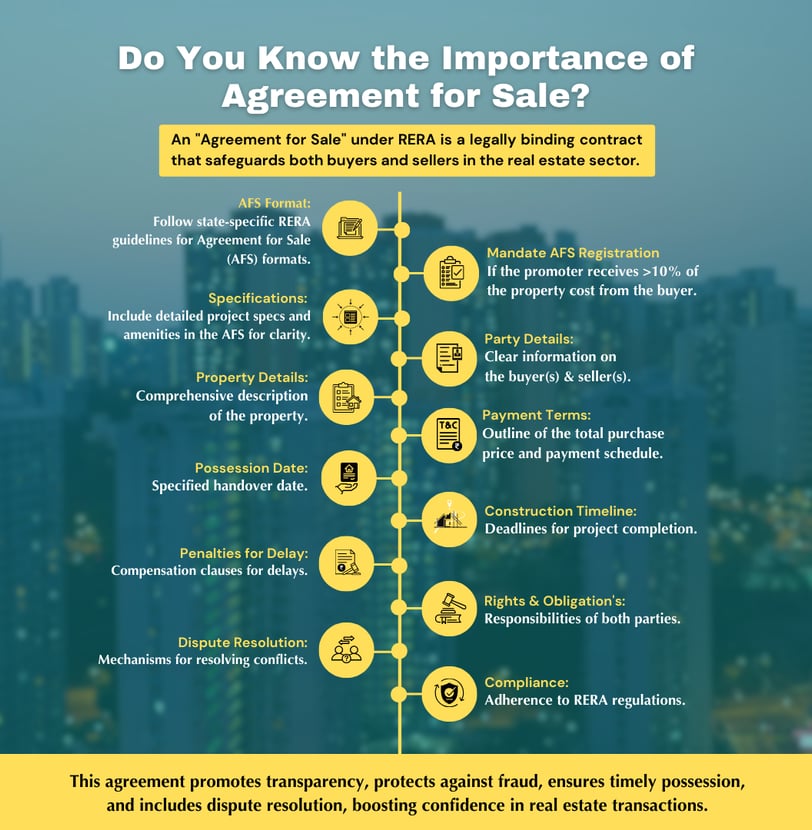
An "Agreement for Sale" under the Real Estate (Regulation and Development) Act, commonly known as RERA, is a legally binding contract between a buyer and a seller in the real estate sector. RERA was enacted to regulate and promote transparency, accountability, and efficiency in the real estate sector in India.
Under RERA, an Agreement for Sale typically includes several important clauses and provisions to protect the interests of both parties. Here are some key components commonly found in an Agreement for Sale under RERA:
Details of the Parties: The agreement should clearly mention the names, addresses, and contact details of the buyer(s) and seller(s).
Property Details: This section includes details about the property being sold, such as its location, size, boundaries, amenities, and specifications.
Payment Terms: The agreement should outline the total purchase price of the property, the mode of payment, and the schedule of payments (including any installments).
Possession Date: It should specify the date by which the seller agrees to hand over possession of the property to the buyer.
Construction Timeline: If the property is under construction, the agreement may include a timeline for completion of construction and delivery of the property.
Penalties for Delay: RERA mandates that agreements should include provisions for penalties in case of delays in possession or construction, including compensation to the buyer.
Rights and Obligations of Parties: This section outlines the rights and responsibilities of both the buyer and the seller, including maintenance obligations, payment of taxes, etc.
Dispute Resolution Mechanism: RERA encourages the inclusion of dispute resolution mechanisms, such as arbitration or mediation, to resolve any conflicts that may arise between the parties.
Other Terms and Conditions: The agreement may include additional clauses relating to cancellation, force majeure events, changes in specifications, etc.
Compliance with RERA Regulations: Finally, the agreement should explicitly state that it complies with the provisions of RERA and any applicable state-specific regulations.
The Agreement for Sale under RERA holds significant importance for both buyers and sellers in the real estate sector for several reasons:
Legal Protection: The Agreement for Sale serves as a legally binding contract that protects the interests of both parties. It provides clarity on the terms and conditions of the transaction, reducing the risk of disputes or misunderstandings.
Transparency and Accountability: RERA mandates that agreements must comply with certain standards of transparency and fairness. This ensures that buyers are provided with accurate information about the property and the transaction, helping them make informed decisions.
Regulatory Compliance: RERA has introduced various regulations and guidelines aimed at promoting transparency, accountability, and efficiency in the real estate sector. The Agreement for Sale must comply with these regulations, providing buyers with additional safeguards against unfair practices.
Timely Delivery of Possession: One of the key provisions of RERA is the requirement for developers to adhere to project timelines and deliver possession of the property on time. The Agreement for Sale typically includes provisions for penalties in case of delays, incentivizing developers to complete projects on schedule.
Protection Against Fraud: By requiring developers to register their projects and agreements under RERA, the law helps protect buyers against fraudulent activities and ensures that developers fulfill their commitments as per the agreed terms.
Dispute Resolution: The inclusion of dispute resolution mechanisms in the Agreement for Sale, as mandated by RERA, provides an avenue for resolving conflicts between buyers and sellers without resorting to lengthy and expensive legal proceedings.
Investor Confidence: RERA aims to enhance investor confidence in the real estate sector by promoting transparency, professionalism, and accountability. The existence of standardized agreements under RERA helps build trust between buyers and sellers, thereby boosting investor confidence.
Contacts
D No.1344, Situated at Nazarbad Mohalla, Vasanth NagaraLayout, Alanahalli, Mysore Karnataka-570028.
Get in touch
reach@sankalplc.in
+91 99012 41849