
𝐄𝐬𝐬𝐞𝐧𝐭𝐢𝐚𝐥 𝐑𝐄𝐑𝐀 𝐆𝐮𝐢𝐝𝐞𝐥𝐢𝐧𝐞𝐬 𝐟𝐨𝐫 𝐑𝐞𝐚𝐥 𝐄𝐬𝐭𝐚𝐭𝐞 𝐀𝐝𝐯𝐞𝐫𝐭𝐢𝐬𝐞𝐦𝐞𝐧𝐭𝐬 🏠💼
Understanding and adhering to RERA guidelines is crucial when advertising real estate projects. Transparency and compliance ensure that potential buyers are well-informed and protected. Start by clearly stating the developer's name, contact details, and address, alongside detailed project information such as name, location, size, and unit types. It's mandatory to prominently display the RERA registration number, as advertising without it is prohibited under RERA regulations.
Pinky G Bhonsley
7/19/20242 min read
𝐑𝐄𝐑𝐀 𝐆𝐮𝐢𝐝𝐞𝐥𝐢𝐧𝐞𝐬 𝐟𝐨𝐫 𝐑𝐞𝐚𝐥 𝐄𝐬𝐭𝐚𝐭𝐞 𝐀𝐝𝐯𝐞𝐫𝐭𝐢𝐬𝐞𝐦𝐞𝐧𝐭𝐬
When advertising in RERA (Real Estate Regulatory Authority), it's crucial to adhere to their guidelines and regulations to maintain transparency and protect consumers' interests. RERA typically mandates that advertisements include essential details such as the developer's name, project details, RERA registration number, accurate depiction of the property, and any disclaimers or terms and conditions. Failure to comply with these regulations can result in penalties or legal repercussions. Therefore, when crafting an advertisement for RERA, ensure it is clear, accurate, and includes all necessary information as per RERA guidelines.
In an advertisement under RERA (Real Estate Regulatory Authority), it's crucial to include specific details to ensure transparency and provide potential buyers with comprehensive information. Here are the important aspects to be displayed in such advertisements:
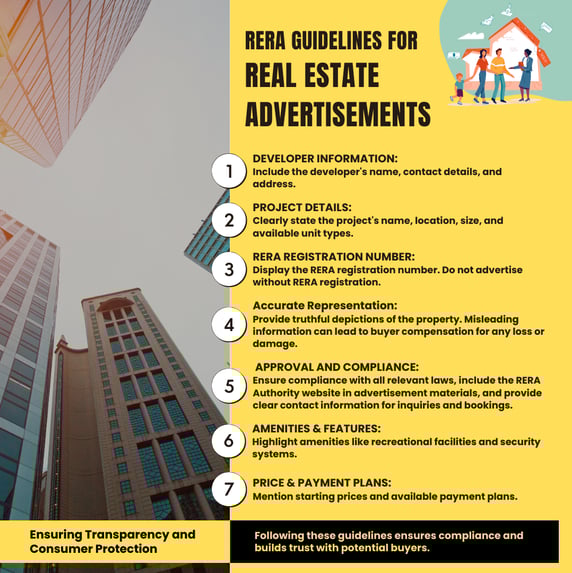
Developer Information: Clearly state the developer's name, contact details, and address. This helps establish credibility and allows potential buyers to verify the developer's background.
Project Details: Include the name, location, size, and type of units available in the project. Providing clear project details helps potential buyers understand what is being offered.
RERA Registration Number: Display the RERA registration number of the project. This is mandatory and ensures compliance with regulatory requirements.
Accurate Representation: Provide truthful and accurate representations of the property, including images, floor plans, and descriptions. Misleading representations are strictly prohibited.
Amenities and Features: Highlight the amenities and features of the project, such as recreational facilities, security systems, and green spaces. This helps potential buyers assess the value proposition of the property.
Price and Payment Plans: Mention the starting prices of units and available payment plans. Transparency regarding pricing and payment options enables potential buyers to make informed decisions.
Legal Disclaimers: Include necessary disclaimers, such as "subject to change" or "terms and conditions apply." This clarifies the conditions under which the advertised offers are valid.
Approval and Compliance: Ensure that the advertisement complies with all relevant laws and regulations, including those related to consumer protection and advertising standards. In some cases, advertisements may require prior approval from RERA.
Contact Information: Provide clear contact information for inquiries and bookings, including phone numbers, email addresses, and website URLs. This makes it easy for potential buyers to get in touch with the developer or their representatives.
Contacts
D No.1344, Situated at Nazarbad Mohalla, Vasanth NagaraLayout, Alanahalli, Mysore Karnataka-570028.
Get in touch
reach@sankalplc.in
+91 99012 41849